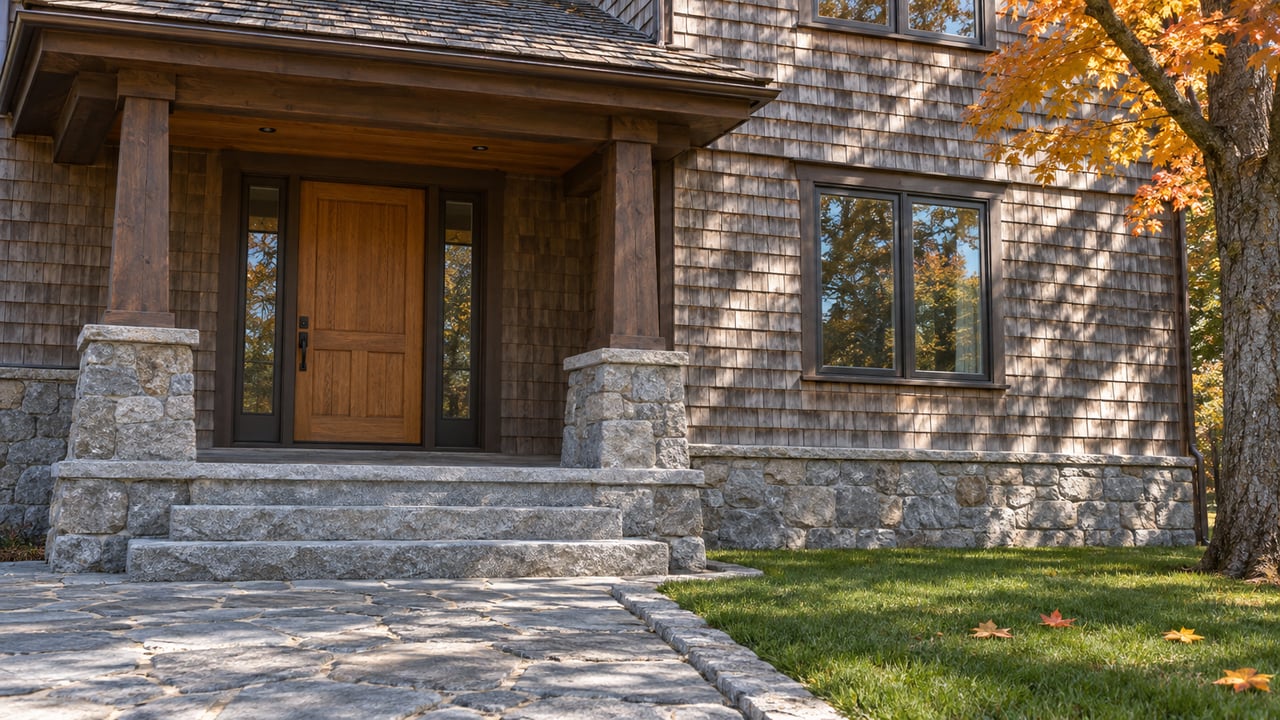
In Hague, the Park Commission Sets the Septic Inspection Year and a Sale Doesn't Change It
October 22, 2026
October 22, 2026
When does the septic system under a Hague lake house get inspected? For homes within 500 feet of Lake George, the answer has nothing to do with a listing or a closing. The Lake George Park Commission assigns the inspection year on a five-year calendar drawn by tax-map block, and the owner books the actual appointment within that year. Neighboring towns handle it differently. Queensbury and Bolton tie an inspection to the sale. The Commission's 2025 report names those two towns' transfer programs as the ones it recognizes, and Hague's is not on that short list.
So a Hague house can change hands before the inspection that decides whether its system needs repairs, a new design, or a full replacement. That inspection matters because most systems inspected so far have needed work.
The Commission's inspection program covers every septic system within 500 feet of Lake George, or within 100 feet of certain DEC-mapped streams. That comes to about 2,500 systems across the basin. They're spread over a first cycle running from 2023 through 2027, at about 500 inspections a year. Each municipality has roughly 20% of its systems due each year. Properties were grouped by tax-map block and lot, so neighbors tend to come due in the same year.
For a Hague owner, the inspection year depends on the parcel's block number, not on how long the family has owned it or whether it's on the market. Here is how an inspection unfolds under the Commission's rules:
The program runs on a $50 annual fee for a residential system. The pump-out is billed separately, and the Commission's septic inspection FAQ estimates $200 to $400 depending on tank size.
This post goes live October 22, 2026, which leaves about two months in the season. Any parcel in the 2026 group that hasn't been inspected yet has until the end of December, when the Commission stops scheduling for the year.
The Commission's 2025 annual report covers 320 first-time inspections completed in 2025:
| 2025 inspection outcome | Share of systems | What it usually meant |
|---|---|---|
| Pass | 43% | Compliant for five years from the inspection date |
| Repairs Needed | 23% | Faulty inlet or outlet tees, pump alarms, distribution box problems, often fixed within days |
| Substandard | 17% | Mostly a tank or absorption area too small for state standards |
| Fail | 18% | Mostly cesspools and failed absorption areas |
Pass rates ranged from 37% to 43% across 2023 through 2025, and failures ran from 18% to 24%. The report says 2025's findings kept showing that more than half of inspected systems needed repair or replacement.
Some of the definitions describe common features of older lake camps. A metal septic tank counts as a failure. So does a cesspool, so does a tank under half its required capacity, and so does any system that needs pumping more than four times a year. An absorption area closer than 50 feet to Lake George is graded substandard. None of these show up on a walk-through. They surface when the tank is open and the inspector is measuring.
Queensbury's Chapter 137 has applied since January 1, 2019, to sales of properties wholly or partly in the town's Waterfront Residential Zone that use an onsite system. Before the sale, the town law requires a town inspection, a pump-out by a DEC-registered hauler, and either a compliant result, a waiver or an exemption. Bolton also inspects at transfer, using trained local haulers and keeping the records at the town.
Under the Commission's rules, an inspection done to Commission standards under a local transfer law exempts the system from the Commission's program for the next five years, as long as the paperwork is filed on time. In those two towns, the sale and the Commission's clock line up.
Hague isn't among the transfer programs the Commission names. A Hague system's inspection year stays wherever its block puts it, which might be next spring or might be after the buyer has unpacked.
With no inspection triggered by the sale, two documents carry most of the septic information.
The first is the seller's disclosure. New York's Real Property Law §462 requires a Property Condition Disclosure Statement before the buyer signs a binding contract, with some exemptions set out in the statute. On the current Department of State form, question 36 asks whether the home uses public sewer, private sewer, septic or a cesspool. It also asks the septic system's age, when it was last pumped, how often it's pumped, and whether the seller knows of material defects. As the New York State Association of REALTORS® explained, sellers have not been able to give a $500 credit in place of the statement since March 20, 2024.
The second is the Commission's Public Database Mapping Tool. You can search an address or zoom to a parcel, and one of the public layers is "Septic System Inspection Year." The layer shows when a parcel is scheduled. It doesn't publish the inspection report or the grade. The Commission requires owners to keep inspection and pump-out records for the life of the system and produce them on request.
Put the disclosure answers next to the parcel's scheduled year and you get a much clearer picture. A system scheduled for an upcoming year, with no recent pump-out on record, could face its first Commission inspection soon after a new owner takes over.
The grade decides the deadline. Under the Commission's wastewater regulation, a failing system gets no more than six months to come into compliance. Where wastewater is pooling on the ground or discharging directly to the water, the Commission can require immediate action. A substandard system gets up to five years. Depending on the problem, the Commission sets substandard deadlines anywhere from 60 days to five years, and it can extend them case by case for good cause, recognizing that engineers and contractors are hard to schedule.
The Commission inspects, but permits for replacement systems still go through the local review authority, whether that's the town, the county or the Department of Health. New systems in the basin must meet applicable DOH and DEC standards, and the Commission's regulation adds its own requirement that absorption areas sit at least 100 feet from a stream, lake or wetland.
The cost range is wide. A 2024 Adirondack Explorer report put regional septic replacement costs at $8,000 to $60,000. Two county programs can help:
Hague homes on town sewer sit outside all of this. The town runs two districts. Sewer District 1 dates from 2003 and District 2 from 2009, and a 2018 town presentation reported 447 equivalent dwelling units on centralized treatment. According to the town's sewer page, annual sewer rent bills go out in the last week of April. July payments carry a 10% penalty, and balances unpaid after July 31 are added to the town and county tax bill. The Commission's FAQ says a municipal sewer bill is a good sign a property isn't on septic, and points owners to county parcel viewers and town records to confirm.
The sewered area could grow. In August 2025, the state awarded Hague $48,500 to study extending sewer service along the Lake George shore to create a third district. The Environmental Facilities Corporation lists it as the "Sewer Expansion Feasibility Evaluation." As The Hague Chronicle reported in its March 2026 issue, the town's 2026 budget set up a $58,200 study line: the $48,500 grant plus a $9,700 town match. Until any new district is built, shoreline septic owners remain on the Commission's calendar.
My system passed. When is the next inspection? A passing system is compliant for five years from the inspection date. A Hague system that passed in 2023 would come due again in 2028.
Does a sale reset the Commission's schedule in Hague? Only an inspection done to Commission standards under a review authority's rules, such as a transfer inspection law, earns the five-year exemption. Queensbury and Bolton are the towns whose transfer programs the Commission names.
What if the parcel's tank and leach field sit outside the 500-foot zone? The regulation exempts a property inside the program area if its tank and absorption area are located entirely outside it. Under the same section, the owner has to prove the exemption applies.
This is general information, not legal, tax or financial advice. Before acting, confirm how these rules apply to your property with the Commission, the Town of Hague, or an attorney or engineer.
If you're buying or selling in Hague and want help finding a parcel's inspection year on the Commission's map, or reading a septic disclosure before you sign, Davies-Davies & Associates Real Estate LLC works through these details on Lake George properties every season. Contact us to talk through yours.
Stay up to date on the latest real estate trends.
We’re here to guide you through every step of your real estate journey with local expertise, clear communication, and a commitment to your goals—whether you’re buying, selling, or investing in the Lake George and Adirondack region.
Davies~Davies & Associates Real Estate LLC
(518) 656-9068
(518) 644-2015
[email protected]
MAILING ADDRESS:
P.O. BOX 201, CLEVERDALE, NY 12820
PHYSICAL ADDRESS:
7 CLEVERDALE RD, QUEENSBURY, NY 12804
4956 LAKE SHORE DR, BOLTON LANDING, NY 12814
FAX: (518) 656-9087